

When families compare cooking fats, they often want to know what makes each one different and which option is suitable for a particular recipe. Desi ghee, butter and common vegetable oils all have distinct flavours, textures and cooking characteristics. Understanding those differences helps you choose an ingredient based on the dish, your preferences and your overall dietary needs. There is no single cooking fat that is automatically best for every person or every meal. The useful question is how each ingredient behaves in the kitchen and how much of it you use.
What is the difference between butter and desi ghee?
Butter contains milk fat along with water and milk solids. Desi ghee is made by clarifying butter or a dairy base so that most of the water and milk solids are removed. This gives ghee a more concentrated fat content and a distinctive aroma. Butter has a creamy taste and is often used in spreads, sauces and baking. Ghee has a deeper, toasted dairy flavour that many people enjoy in parathas, daal, rice dishes and traditional sweets.
Because ghee contains very little water compared with butter, it behaves differently in recipes. It can be useful when a cook wants a rich dairy flavour without adding the same water content as butter. However, recipes are not always interchangeable measure for measure. Baking in particular depends on the balance of fat, water and other ingredients, so follow a tested recipe when substituting one for another.
How does ghee compare with vegetable oil?
Vegetable oils vary widely. Some are made from seeds, while others come from fruits or other plant sources. Their flavour, fatty-acid profile and performance at cooking temperatures depend on the type of oil and how it has been processed. Many neutral oils are chosen when a recipe needs a mild taste. Desi ghee is selected when its dairy aroma and traditional flavour are part of the desired result.
Ghee is often valued for its suitability in many sautéing and frying applications, but smoke point is not the only measure of cooking quality. Avoid overheating any fat until it smokes, and discard fat that has become badly degraded through repeated high-heat use. Choose the cooking fat that suits the dish, keep the temperature appropriate and use sensible portions.
Flavour and everyday cooking uses
For Pakistani food, flavour is often the deciding factor. A little ghee can make a paratha smell inviting, give a daal tarka a traditional finish or add richness to a serving of khichri. It is also used in halwa, panjiri, kheer and other desserts. Butter may be preferred for a creamy sauce or a particular baking recipe, while a neutral vegetable oil can work well for dishes where a strong dairy flavour is not wanted.
Think about the result you want before choosing. If the recipe depends on the aroma of traditional dairy cooking, ghee may be a natural fit. If you want a neutral background, a suitable vegetable oil may be more appropriate. For a buttery taste in a recipe, butter may be the better option. Keeping more than one cooking fat in the kitchen allows you to make a choice based on the meal rather than forcing every dish to use the same ingredient.
Nutrition: what should you consider?
Ghee and butter are both concentrated sources of fat and contain saturated fat. Many vegetable oils contain a higher proportion of unsaturated fats, although the exact profile varies by oil. All fats provide energy, so the amount used matters. It is sensible to pay attention to serving sizes and to consider your complete eating pattern rather than judging a food by one nutrient or a single marketing phrase.
Ghee is sometimes discussed in connection with fat-soluble vitamins and butyric acid. The amount of these nutrients in a serving can vary, and ghee should not be presented as a treatment or cure for a health condition. It is a food ingredient, not a substitute for medical care. If you have high cholesterol, cardiovascular concerns or another condition that affects dietary fat choices, follow advice from your doctor or registered dietitian.
How to buy and store desi ghee
Choose a product with clear seller information and packaging that is sealed and suitable for food. Do not rely on colour, smell or a home experiment as proof of purity. Ask the brand about sourcing and quality practices if information is not clear. Once opened, keep the jar tightly closed in a cool, dry place, away from sunlight and strong odours. Always use a clean, dry spoon and follow the label’s storage guidance.
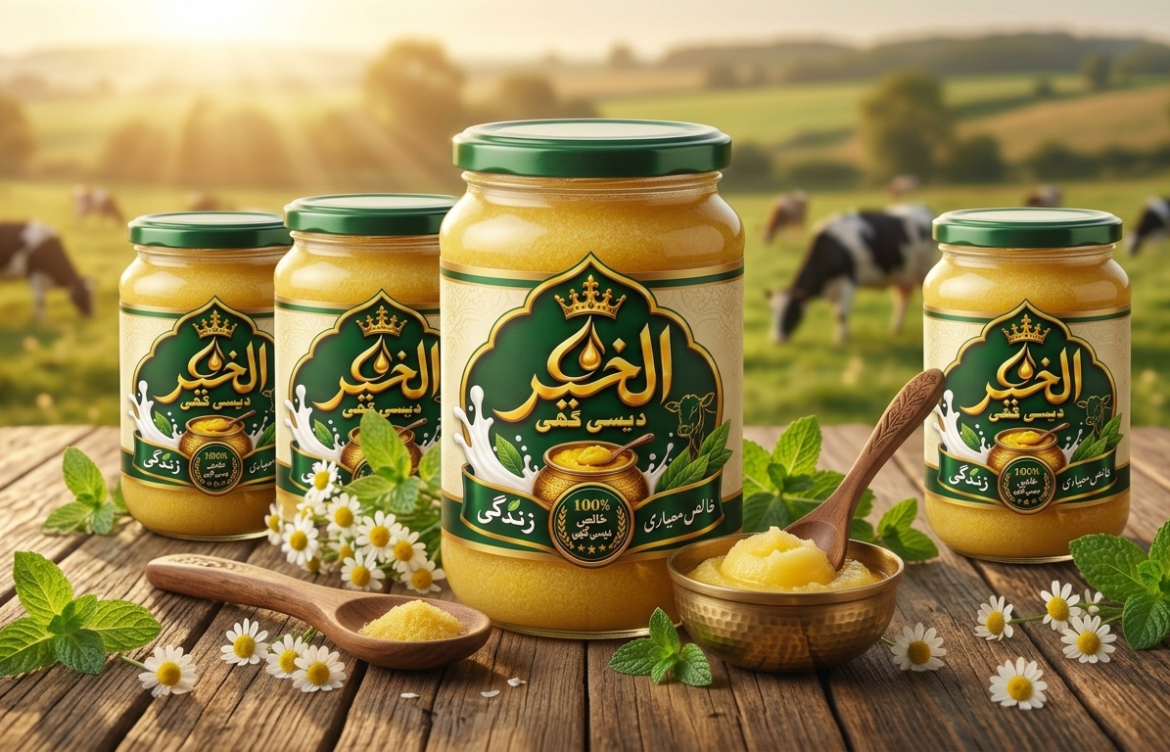
Al Khair Desi Ghee focuses its product story on traditional taste, careful preparation and hygienic packing. The website lists convenient jar sizes, including 500g and 1kg options, so households can select according to how often they cook with ghee. Visit the Al Khair homepage to learn about the brand or browse the Al Khair online shop for current product details, prices and availability.
Which option should you choose?
For a paratha, traditional daal or a dessert where a familiar dairy aroma is welcome, desi ghee can be a satisfying choice. For a recipe that needs a creamy buttery taste, butter may be more suitable. For a neutral flavour or a specific cooking method, a suitable vegetable oil may work better. These are practical cooking decisions, not a competition in which one ingredient must win every time.
Consider your preferences, the recipe and any dietary advice you have received. Use fats in moderate quantities and include a variety of foods across the week. If you are cooking for someone with allergies or a medical dietary restriction, check ingredient labels and seek professional advice where necessary.
Frequently asked questions
Can I replace butter with ghee?
Sometimes, but not in every recipe. Ghee contains less water than butter, so baking and pastry recipes may need adjustments. Use a recipe designed for ghee or follow a reliable substitution guide.
Is vegetable oil always healthier than ghee?
Different oils have different fatty-acid profiles. Many plant oils are higher in unsaturated fats, while ghee contains more saturated fat. Your overall diet, the type of oil and the amount used all matter. Personal medical needs should guide individual choices.
Does golden colour prove that ghee is pure?
No. Colour can vary naturally and cannot establish purity on its own. Reliable quality checks require appropriate testing and clear product standards.
Explore Al Khair Desi Ghee
Every kitchen has its own traditions and favourite recipes. Understanding the differences between ghee, butter and vegetable oil makes it easier to choose the right ingredient for each meal. If you enjoy the aroma and flavour of traditional Pakistani cooking, explore Al Khair Desi Ghee in the online shop. You can also visit Home for the brand story or use the Contact Us page for product and order enquiries.
Bring Al Khair Desi Ghee to Your Kitchen
Explore our available products and choose the jar size that suits your home.
Explore the Shop